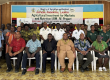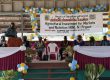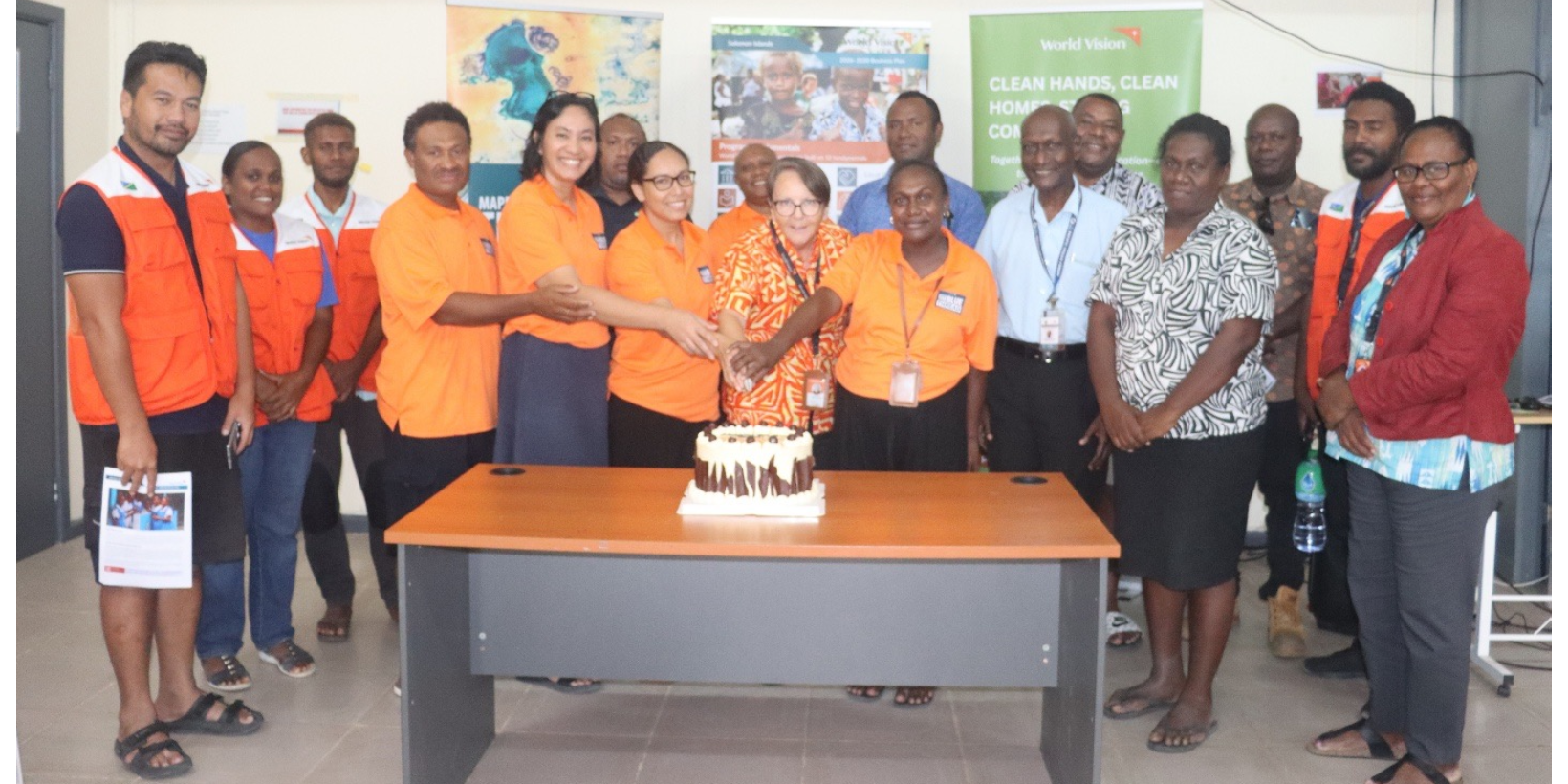
World Vision Solomon Islands (WVSI) on Tuesday, 2 December 2025, launched its 2026–2030 Water, Sanitation and Hygiene (WASH) Business Plan at its Honiara office, outlining a renewed commitment to improving essential services for thousands of Solomon Islanders.
The event brought together representatives from the Ministry of Education and Human Resources Development, Honiara City Council, the Ministry of Lands, Housing and Survey, and several NGOs, reflecting strong multisector support.
WVSI’s Sector Portfolio Manager for WASH, Tema Wickham, presented the new plan titled “Mapping the Blue Thread,” which highlights water as a vital link between people, places and development.
“This plan gives us a practical and united way forward,” Wickham said. “Every household, school and clinic deserves safe water and dignified sanitation. No community should be left behind.”
The five-year plan aims to reach 19,150 people with improved water access, 4,154 with sanitation facilities, and 5,865 with hygiene services. It will also strengthen WASH services in 15 schools and five healthcare facilities across six operational areas.
Ministry of Education representative Coldrine Kolae said the initiative is crucial for healthy learning environments. “Access to clean water and proper sanitation directly affects students’ health, attendance and learning,” he said.
Acting WVSI National Director Helen Corrigan said improving WASH infrastructure is fundamentally about investing in the wellbeing and future of children.
The plan responds to widespread gaps in access: only 59% of rural residents have an improved water source within 30 minutes’ walk, less than 21% have improved toilets, and just 28% have handwashing facilities with soap and water.
The programme will focus on Water Supply & Water Quality and Sanitation & Hygiene, with special attention to vulnerable communities in Mataniko and Vura wards, where 1,152 people will benefit from upgraded WASH systems.
The initiative builds on World Vision’s global WASH experience and aligns with national priorities and Sustainable Development Goal 6.
– WVSI