Landowners who invite mining companies to prospect and extract minerals such as gold, bauxite, nickel and platinum will now have the opportunity to better understand the extractive industry through a newly developed mining toolkit.
The initiative is led by the Development Services Exchange (DSE) in partnership with the International Centre for Advocates Against Discrimination (ICAAD), Apunepara Ha’amwa’ora Natural Resources Association (AHRNA), and a community-based organisation from Lauru, Choiseul Province.
The project is supported and funded by the Earth Rising Foundation.
The Mining Toolkit aims to inform landowners and communities about the benefits and risks of mining, their legal rights, and available mechanisms for raising concerns.
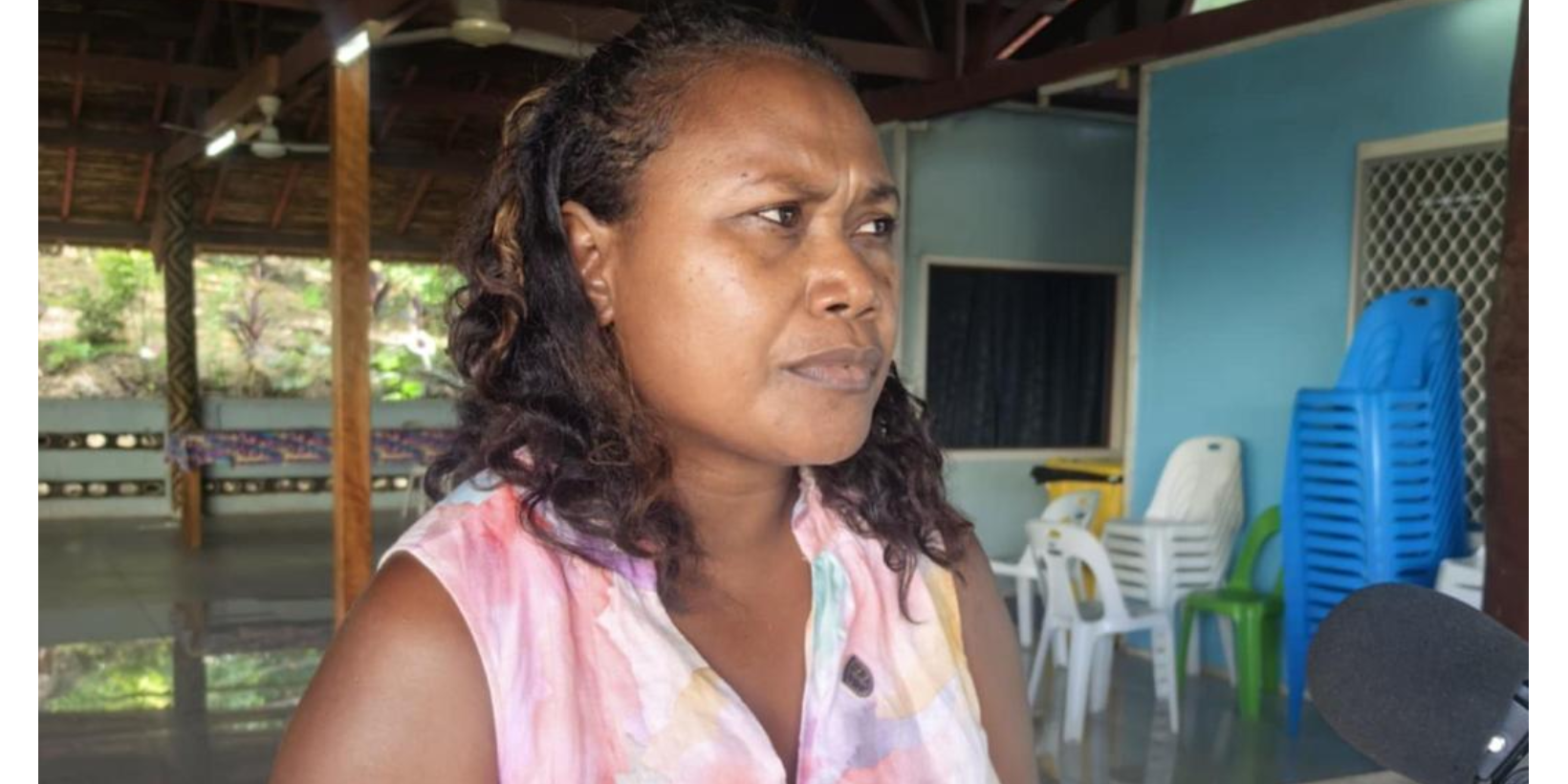
Anti-mining activist Adi Galokepoto Bennett told media during a DSE-organised Mining Toolkit and Media Advocacy Workshop at St Barnabas Melanesia Leaf Hut on Thursday that the toolkit empowers communities to better understand their rights.
“You let the community know what their rights are, how to use several pathways for raising issues if they are unhappy with how the government is carrying out mining, or if mining is affecting their livelihood,” she said.
“There are clear guidelines on how to assist those raising issues, rather than taking matters into their own hands.”
Mrs Galokepoto is a member of the Forum Against Mining on Choiseul (FAMOC), which has campaigned against mining activities on Choiseul since 2013, initially opposing Japanese company Sumitomo and later Solomon Nickel Mining Company Ltd (SNMCL), owned by Filipino businessman Johnny Sy, at Siruka.
She said the toolkit also provides an avenue for communities to express disagreements and grievances.
“At least they have a mechanism where they can share their grievances. This mining toolkit helps them understand the laws, the processes they can follow, and how they can advocate if they don’t want mining to affect their area,” she said.
“It’s a useful mining toolkit.”
According to Ms Galokepoto, who was awarded an Australia Award Scholarship to do PhD next year, the toolkit allows communities to weigh the pros and cons of mining, understand conditions attached to mining approvals, and recognise government responsibilities.
“For us, we are enhancing a process we started back in 2014 when we tried to raise awareness using whatever materials we had.
“This time, there is a standard way to communicate and encourage collaboration among communities to share views and raise awareness of our rights,” she said.
Mining activity in Solomon Islands has increased following the “mining fast-tracking policy” introduced by the former Democratic Coalition Government for Advancement (DCGA) led by then prime minister Manasseh Sogavare, aimed at cushioning the economy from the COVID-19 pandemic’s impact.
Siruka Nickel Mining is one of three projects approved under the fast-track policy introduced by Cabinet in 2020 as part of a post-pandemic economic stimulus plan.
Two other fast-tracked projects in Isabel Province have raised concerns. One is Solomon Islands Resources Company Ltd operating in Suma, owned by controversial miner Dan Shi. His company, Win Win Investment Solomon Ltd, has previously been accused of gold smuggling and compliance breaches.
The other is Pacific Nickel Mines Kolosori Ltd, currently operating at Havihau in Isabel Province.
Meanwhile, General Secretary of the Solomon Islands Indigenous People’s Human Rights Advocacy Association (SIIPHRAA), Baddy Wickham, said the country’s mining laws do not adequately reflect Melanesian and Polynesian cultural systems.
He said that in Rennell and Bellona Province, land ownership is held by tribes, families and individuals, making it wrong for the state to claim ownership of minerals below six feet underground.
Mr Wickham said this issue must be addressed, as his people have been victims of unpaid royalties linked to 33 bauxite shipments by Asian Pacific Investment Company (APID) and Bingtang Mining (BMSI).
The 33 shipments between 2017 and 2019 allegedly resulted in approximately $8.6 million in unpaid royalties owed to the government, the province and local landowners.
This prompted Minister for Mines, Energy and Rural Electrification, Derrick Manuarii, to establish a Commission of Inquiry (COI) in May 2025 to investigate the missing funds and hold those responsible accountable.
To date, however, the COI has yet to sit on the matter of the outstanding 33 bauxite shipments.
By EDDIE OSIFELO
Solomon Star, Honiara