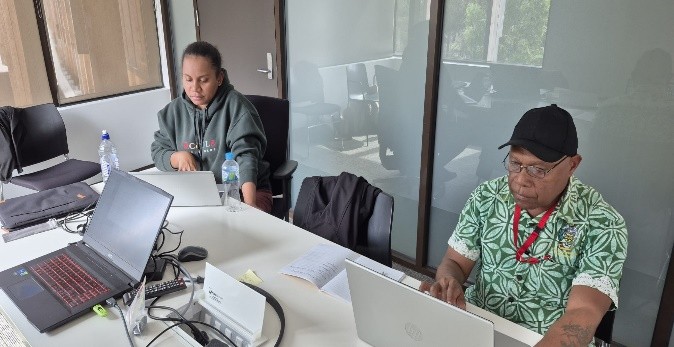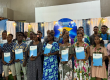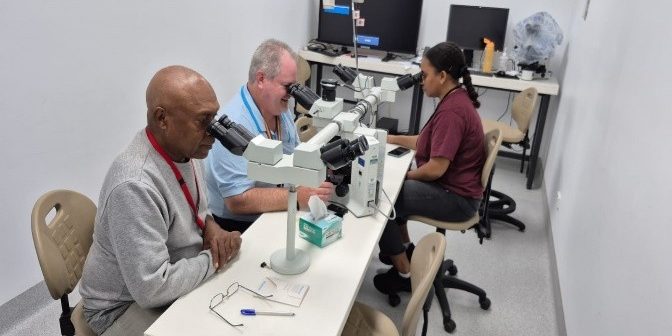
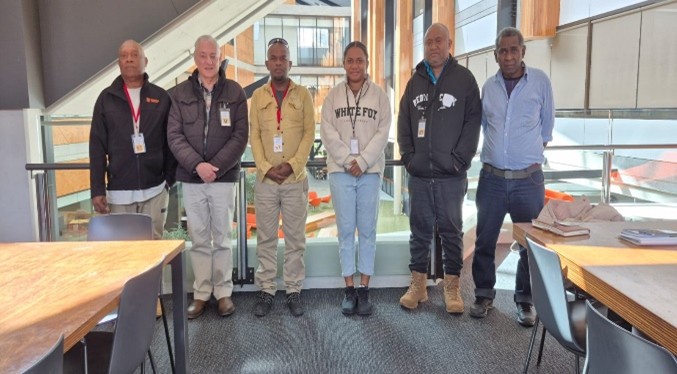
As part of government’s effort to improve animal health, food security, and public health, five officers from the Ministry of Agriculture and Livestock (MAL) have successfully complete an AgriBioscience Epidemiology and LAMP Training Program.
The two training was held from 17 to 28 November 2025 in Melbourne, Australia.
This was to strengthen national capacity in animal disease surveillance, investigation, and response.
The training was conducted at OMNI Animal Health Consultancy and focused on building practical field epidemiology skills through an integrated, hands-on learning approach.
Participants were equipped with essential skills to investigate and manage animal diseases using a holistic “One Health” perspective, integrating environmental, animal, human, and data-driven considerations.
The program covered two core components, field epidemiology training and LAMP (Livestock Data and Monitoring Platform) training, aimed at strengthening technical capacity, improving data-driven decision-making, and supporting effective disease management across the Solomon Islands.
Epidemiology was introduced as the “ecology of disease” a living and evolving science that recognises the close connections between ecosystems, animal management practices, climate, and community behaviour. Participants learned to apply a practical framework based on four essential interactions:
- “Talking to the earth” by assessing environmental and ecological factors;
- “Talking to the animals” through observation, clinical examination, and sampling;
- “Talking to the people” by gathering histories and understanding local contexts; and
- “Talking to the data” by analysing disease patterns, trends, and linkages using epidemiological tools.
By integrating information from all four sources, participants are now better equipped to make informed, practical, and socially acceptable decisions to prevent and control animal diseases.
Animal health is a national priority for the Solomon Islands, where livestock play an important role in food security, livelihoods, and cultural traditions.
Globally, the World Health Organization recognises that most emerging human infectious diseases originate from animals, highlighting the importance of strong animal health systems for protecting both agriculture and public health.
While challenges remain, including limited veterinary infrastructure, workforce shortages, and resource constraints, the training identified clear pathways forward.
These include continued collaboration with AgriBioscience Agriculture Victoria, integration of training materials into national education and capacity-building programs, expanded disease surveillance, and stronger engagement with policymakers and livestock producers.
This initiative reflects a shared vision of “Healthy Animals for a Healthy Solomon Islands” and reinforces the country’s commitment to building resilient animal health systems that support sustainable agriculture, economic development, and healthy communities nationwide.
– MAL Media Release