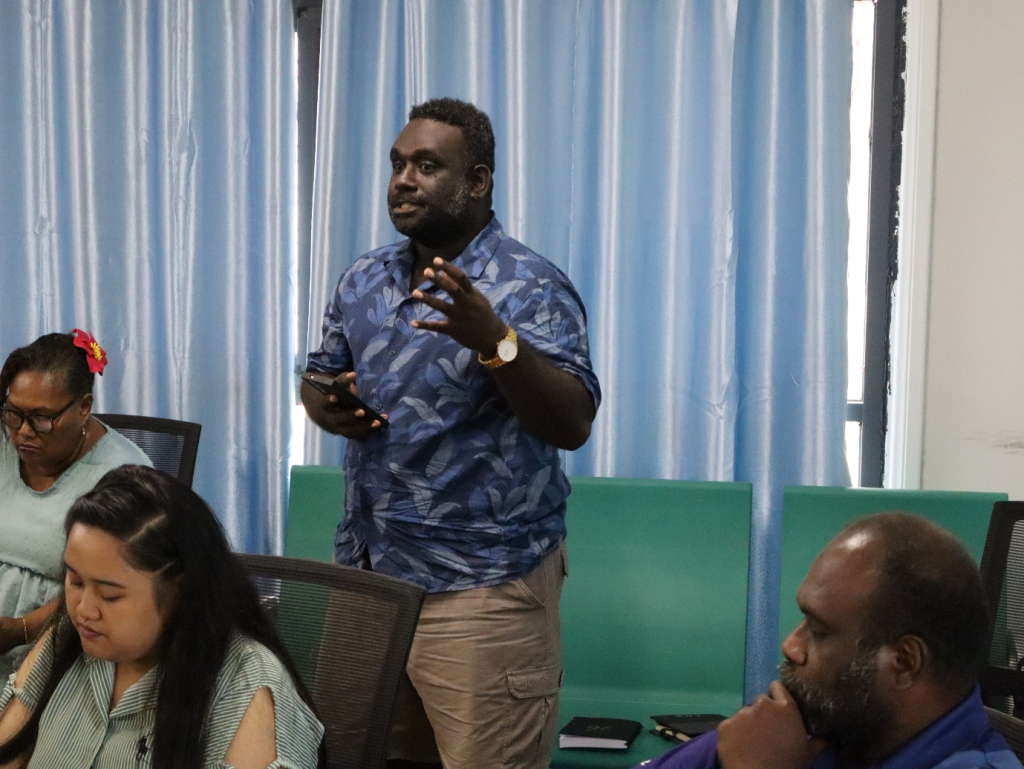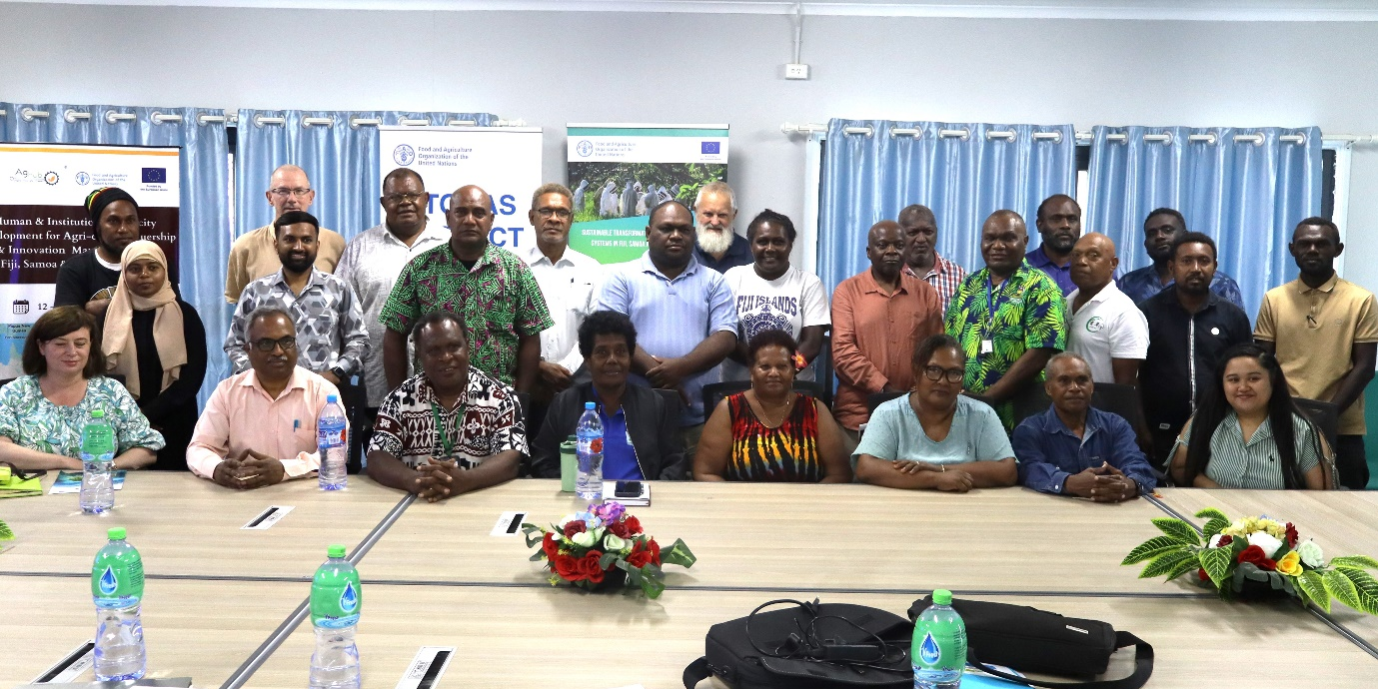
A five-day Human and Institutional Capacity Development Workshop is currently underway in Honiara.
It is aimed at strengthening agribusiness incubation and innovation systems in the Solomon Islands.
The workshop is hosted by the Agri-Business Incubation (ABI) Centre, a partnership between the Ministry of Commerce, Industry, Labour and Immigration (MCILI) and the Ministry of Agriculture and Livestock (MAL).
It is organised under a Letter of Agreement on Comprehensive Agricultural Incubation, focusing on technical services and the development of human and institutional capacity.
Speaking on the importance of the initiative, Deputy Secretary Special Duties (DSSD) at the Ministry of Agriculture and Livestock (MAL), Mr Simon Baete, said the workshop aligns with the Government’s broader agricultural transformation agenda.
“This week-long human and institutional capacity development workshop is strategically important for the Solomon Islands as it strengthens the foundation for an effective and sustainable agribusiness incubation system.
“While agriculture remains the primary livelihood for most Solomon Islanders, the sector is constrained by limited commercialisation, weak business support structures, and restricted access to finance, technology, and markets,” Mr Baete said.
He added that by drawing on India’s proven agribusiness incubation experience, the workshop builds the operational capacity of ABI staff and equips local agripreneurs—particularly youth, women, and rural entrepreneurs—with practical, market-oriented skills.

Mr Baete further stated that the workshop enhances coordination among government, the private sector, and development partners, while ensuring incubation systems and seed fund mechanisms are tailored to the Solomon Islands context.
The workshop directly supports national priorities on food security, rural employment, private sector development, and climate-resilient agriculture.
The Ministry of Commerce, Industry, Labour and Immigration (MCILI) highlighted the role of agribusiness incubation in private sector development and job creation.
“The ABI Centre is a strategic platform for nurturing agripreneurs and linking agriculture with markets, investment, and employment opportunities. Building strong institutional capacity ensures that agribusiness incubation becomes a sustainable engine for economic growth,” the Ministry said.
The programme forms part of the AgHub–Pacific Islands ABI Operational Launchpad Programme, implemented in the Solomon Islands, Samoa, and Fiji through a collaboration between the Food and Agriculture Organization (FAO) of the United Nations and the AgHub Foundation at Professor Jayashankar Telangana State Agricultural University (PJTAU) in Hyderabad, Telangana, India, with support from the European Union.
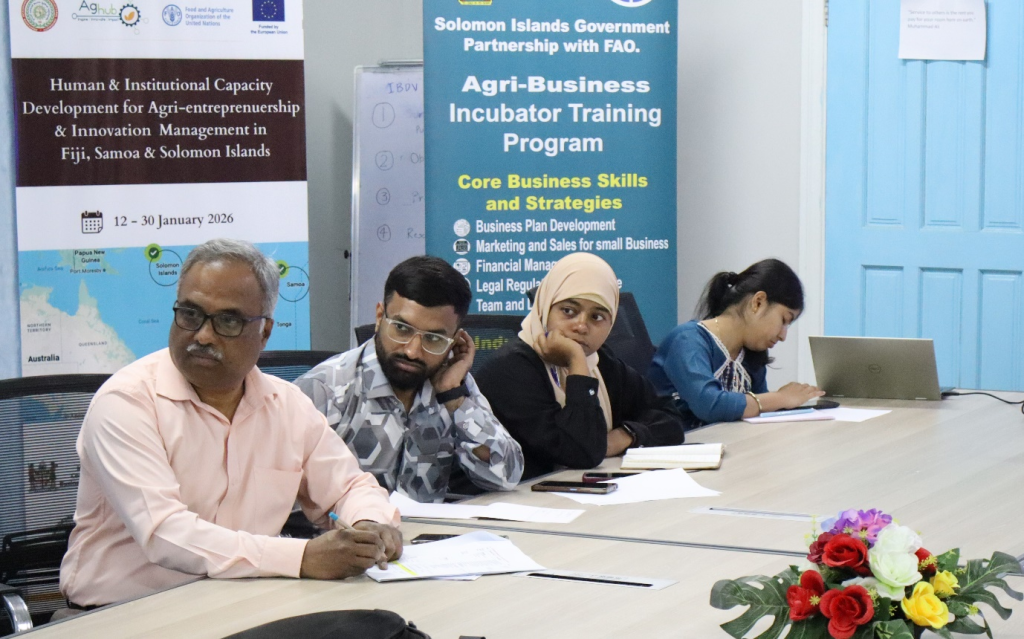
FAO emphasised the importance of incubation in strengthening food systems and rural economies, stating that agribusiness incubation plays a vital role in supporting innovation across the food system.
Through this collaboration, FAO is supporting the Solomon Islands to build institutional capacity that empowers entrepreneurs, strengthens value chains, and enhances food security.
The European Union reaffirmed its commitment to supporting sustainable and inclusive agricultural development in the Pacific and expressed pride in supporting initiatives that strengthen local capacity, foster innovation, and create opportunities for young people and entrepreneurs.
The workshop reflects a shared commitment to inclusive economic growth and resilient food systems.
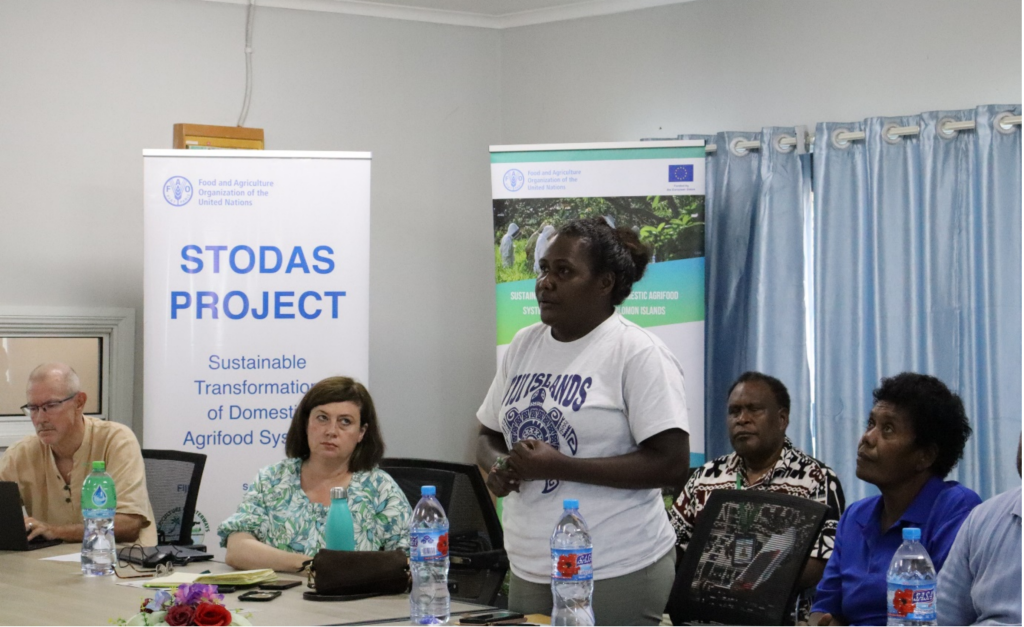
AgHub Foundation facilitators underscored the value of sharing practical experience from India’s agricultural innovation ecosystem.
“This programme is designed to translate global best practices into practical, locally relevant incubation systems.
“By combining operational training, real-world case studies, and collaborative tool development, we aim to help the ABI Centre establish a strong foundation for long-term success,” the AgHub team leader said.
Over the five days, participants are engaging in sessions covering ecosystem engagement, operational management of agribusiness incubators, entrepreneur support services, field exposure, and the development of practical incubation tools.
The workshop will conclude with the co-creation of essential operational manuals to guide incubation processes, seed fund management, staff capacity building, and ecosystem development.
The initiative reflects the continued commitment of the Solomon Islands Government and its development partners to reposition agriculture as a key driver of innovation, private sector growth, and sustainable national development.
– MAL