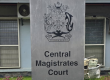
High Court Dismisses Security, Joinder Applications in Constitutional Case
By ASSUMPTA BUCHANAN
Solomon Star, Honiara
THE High Court has dismissed two preliminary applications in the constitutional challenge brought by a coalition of 28 Members of Parliament allowing the case to move closer to a substantive hearing on the convening of Parliament.
Chief Justice Sir Albert Palmer delivered the rulings on Saturday, rejecting both an application by the Attorney General for security for costs and a separate application by the Kadere Party seeking to be joined as a party to the proceedings.
The matter, which is being treated as high priority due to its constitutional significance, arises from recent political developments in which a bloc of 28 MPs indicated support for a new coalition, raising questions about whether the Government retains majority support and who holds the legal authority to convene Parliament.
In the first ruling, the Court dismissed the Attorney General’s application seeking orders that each claimant deposit SBD30, 000 as security for costs.
“The balance of justice does not favour the imposition of security for costs,” Sir Albert said.
Attorney General John Muria Jr had argued there was a risk the claimants may be unable to meet any adverse costs order if the defendants were successful.
However, the Chief Justice found the application lacked a proper evidential foundation and failed to meet the threshold requirements under the Civil Procedure Rules. He noted there was no evidence that the claimants would be unable to pay costs, were outside the jurisdiction, or would evade enforcement, emphasising that the burden rested on the applicant to establish such grounds.
Sir Albert further held that the case raises significant constitutional and public interest questions, including the respective roles of the Governor-General and the Prime Minister in relation to the convening of Parliament in the context of parliamentary confidence.
“These are, on any view, questions of constitutional dimension,” he said, rejecting suggestions that the claim lacked merit or was non-justiciable.
He warned that granting the application could restrict access to justice in a matter of national importance. The application was dismissed with costs awarded to the claimants.
In a separate ruling, the Court rejected the Kadere Party’s application to join the proceedings.
“The application is wholly without merit.”
The party had argued that issues involving the status of two of its members and compliance with the Political Parties Integrity Act had relevance to the case. However, the Court ruled that the party was neither necessary for the determination of the dispute nor directly affected by its outcome, as required under the Civil Procedure Rules.
Sir Albert also found that the application sought to introduce collateral political issues into a constitutional judicial review, constituting an abuse of process. The application was dismissed with costs awarded on an indemnity basis.
Outside of court, Attorney General John Muria Jr said the rulings would not significantly affect the substantive case, noting that the Kadere Party’s application was independent and the security for costs application was aimed at managing litigation risk.
He acknowledged the Court’s findings on evidential shortcomings, saying the matter had progressed rapidly.
“We put costs to argue the matter but as the court says, the evidence is weak, there was no time to file evidence before the court,” he said.
Outside of court, claimant’s counsel Gabriel Suri welcomed the rulings, saying they reflected clear legal principles.
“I am very grateful. I think the ruling by the Chief Justice lays clearly the fundamental principles that we must follow. You don’t bring unnecessary applications at the start of proceedings. A good result for Easter,” Suri said.
He added that he remained confident heading into the next stage and would oppose the strike-out application.
“I will oppose the application for strike out. The Chief Justice already gave indications. I am encouraging the Attorney General to reconsider it,” he said.
Suri said the next stage would focus on whether there is an arguable case, noting the Court had already indicated the constitutional nature of the issues.
At the centre of the case is whether the Government has the legal authority to determine the timing of Parliament sittings and whether that power is constitutionally limited.
The constitutional challenge was filed by a coalition led by People’s First Party Wing Leader Frederick Kologeto, Opposition Leader Matthew Wale, and Independent Members Leader Manasseh Maelanga, along with six political parties. The defendants are the Governor-General, Prime Minister, Speaker of Parliament, and Attorney General.
The Court had earlier fast-tracked the matter, ordering urgent filing of sworn statements and shortening procedural timelines due to its public importance.
The Attorney General has also filed a strike-out application.
The Court has directed all parties to file documents for both the pre-trial conference (PTC) on substantive matter and strike-out hearing by close of business Tuesday next week.
The matter will return to court again Wednesday this week for hearing of the pre-trial conference and strike out application.
Ends/////////////