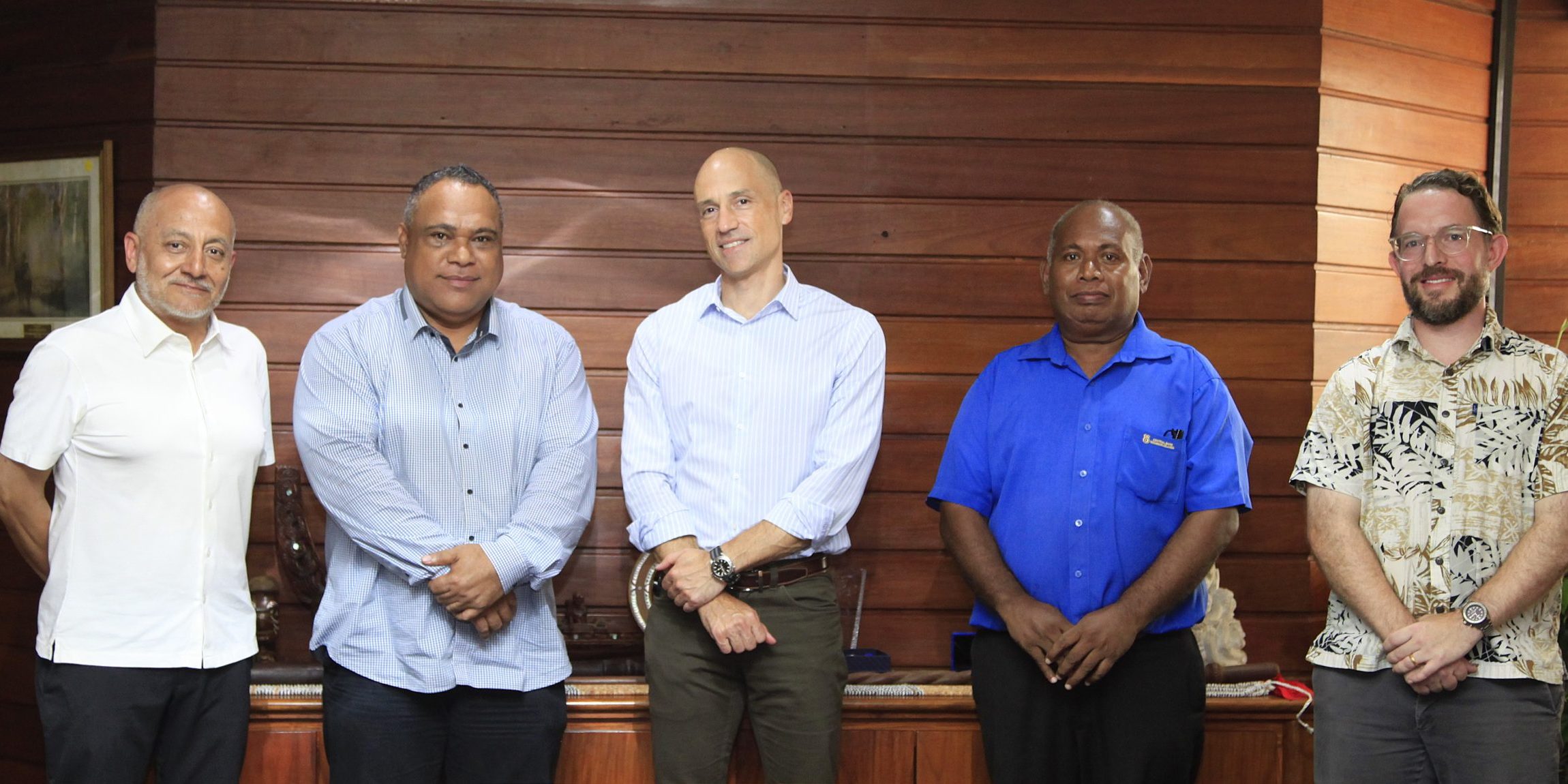
The Central Bank of Solomon Islands (CBSI), in partnership with Australia, has commenced nationwide consultations on the development of a unified Quick Response (QR) code payment standard for Solomon Islands.
The initiative aims to improve interoperability among digital payment providers and expand access to electronic payments, particularly for underserved and financially excluded communities.
The proposed unified QR code standard follows recommendations by the National Financial Inclusion Taskforce’s (NFIT) Digital Finance Working Group and supports the objectives of the National Financial Inclusion
Strategy 3 (2021–2025). It also aligns with CBSI’s mandate under the Payment Systems Act 2022.
CBSI Governor Dr. Luke Forau acknowledged Australia’s support and underscored the importance of the initiative in advancing financial inclusion in the country.
“The CBSI acknowledges Australia’s support and is fully committed to the unified QR code initiative”. Dr. Forau said.
“This will enhance financial inclusion by enabling financial service providers of varying sizes and customer segments, including the financially excluded and underserved such as market vendors, rural farmers and fishermen, women and young entrepreneurs to increase adoption of digital payments, and their integration into the digital economy,” Dr Forau added.
The unified QR code is intended to support a range of uses, including government payments, person-to-person transfers and merchant payments. It also aligns Solomon Islands’ payment systems with global standards and future cross-border payment opportunities that would benefit the labour mobility and tourism sectors.
Australia’s High Commissioner to Solomon Islands, Jeff Roach, highlighted the benefits of a unified QR code standard.
“Australia is pleased to support this project,” High Commissioner Roach said.
“A unified QR code will make it easier for different payment systems to work together, speed up digital payments for businesses and government services, and allow more financial providers to get involved. Australia has supported the development of Solomon Islands’ financial system for many years, and we are proud to be working with the Central Bank of Solomon Islands to move this project forward.”
QR code payments are low-cost easy-to- deploy digital payment solutions for making and accepting payments between a customer and merchant. Having a unified standard ensures QR code payment solutions offered by banks, mobile and e-money providers, and other financial service providers are interoperable. This means a customer can pay for goods and services to merchants who use various QR code payment platforms without the need to have multiple accounts.
By reducing payment frictions and improving the customer experience, a unified QR code standard is expected to increase the uptake of digital payments and strengthen financial inclusion nationwide.
According to CBSI, the current assessment phase will evaluate both the technical feasibility and market usability of a unified QR code standard. The findings will inform the next steps in the development and potential implementation of the system.
– CBSI