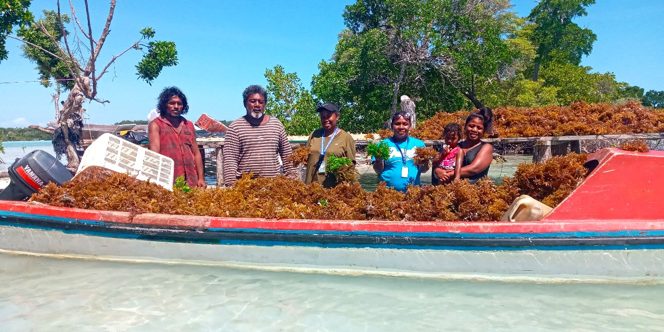
About 922 new farmers have taken up seaweed farming in less than a year, increasing the total number of seaweed farmers in the Solomon Islands from 1,445 in December 2024 to 2,367 by the end of October 2025.
Minister of Fisheries and Marine Resources, Bradley Tovosia, attributed the growth to increased government support since 2024.
He said the sector continues to receive priority funding, with $7 million allocated in 2024 and a further $11 million in 2025.
The minister highlighted that dry seaweed production has grown fivefold, from an annual output of 2,500 pounds in 2024.
“In terms of revenue, export earnings for 2025 up to October reached about $31 million, compared to $20 million in the previous year,” he said.
Minister Tovosia explained that the 2025 funding enabled over $7 million to be distributed to successful seaweed farmers for materials and equipment, with further procurement and delivery scheduled for the first quarter of 2026.
Looking ahead, he said the 2026 national budget allocates $13 million to expand the industry and develop in-country processing capacity.
“If we export processed seaweed gel instead of raw dried products, we plan to purchase processing machines and work with local investors to add value to our product,” he said.
According to the Pacific Community (SPC), seaweed farming is a key source of income in Wagina in Choiseul Province and Manaoba Islands in Malaita Province, often run as a family business.
Since its establishment in the Solomon Islands in 2002, the industry has primarily exported dried raw seaweed, but government plans aim to increase local processing and value addition.
Minister Tovosia said the steady growth of seaweed farming not only supports livelihoods but also contributes significantly to the nation’s export earnings, making it a priority sector for continued development.
By EDDIE OSIFELO
Solomon Star, Honiara