Solomon Islands has scored 44 out of 100 in the 2025 Corruption Perception Index (CPI), marking a one-point improvement from its 2024 score.
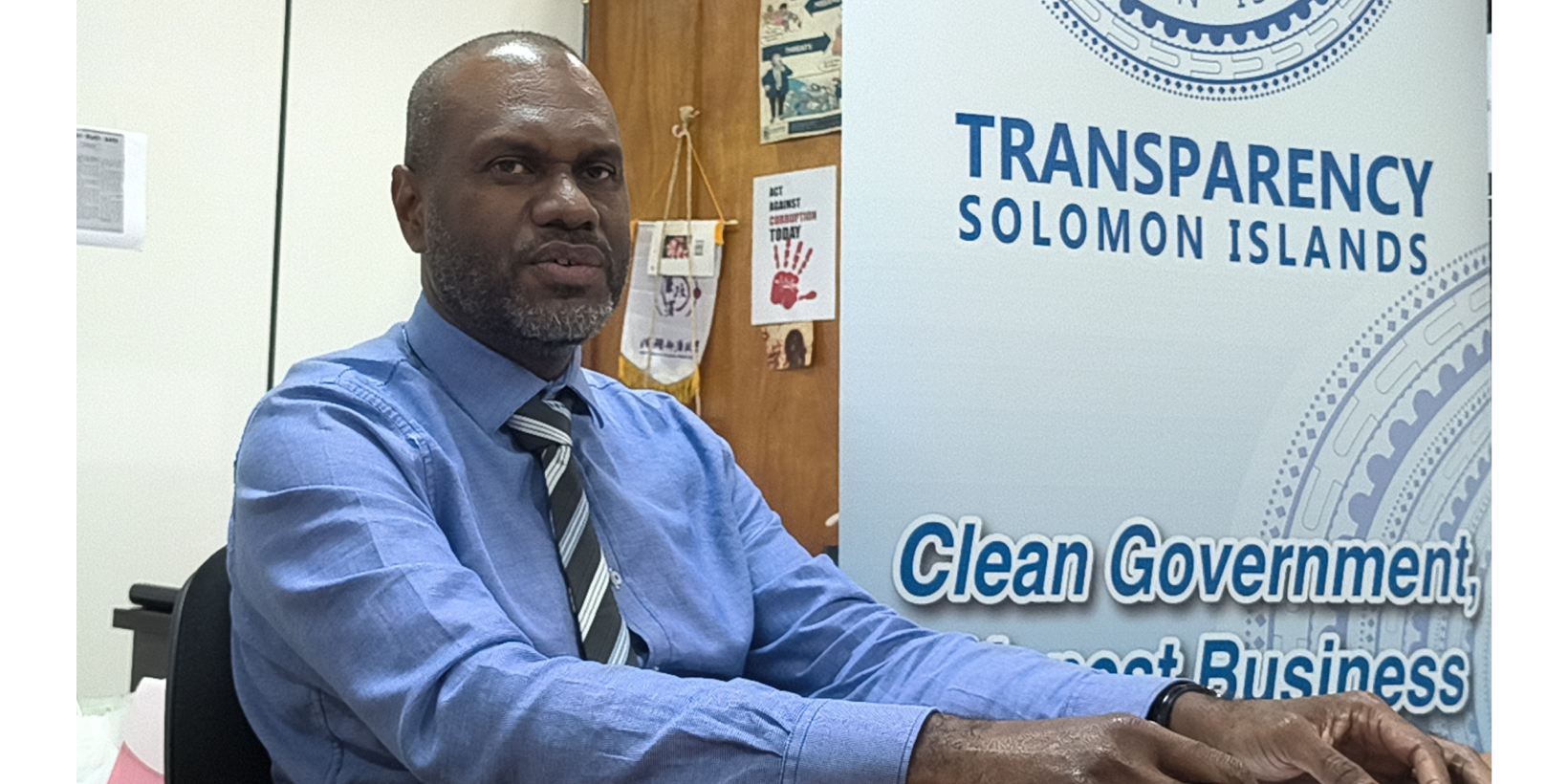
This was confirmed by Transparency Solomon Islands (TSI) Board Chair, Rodney Kingmele, during the launch of the CPI 2025 report for Solomon Islands and a press conference on Wednesday.
While acknowledging the improvement, Mr Kingmele cautioned that the score still reflects serious concerns.
He stated that although the increase represents movement in the right direction, a score of 44 out of 100 indicates that Solomon Islands continues to be perceived as facing significant corruption challenges that undermine national development.
The theme for the 2025 CPI is “The Integrity of Electoral Processes and Their Importance to the Integrity of Political Leadership.”
Mr Kingmele described the theme as a wake-up call, particularly as the country enters the second year of the Government of National Unity and Transformation (GNUT)-led administration, with national elections just two years away.
“We must ask ourselves: what guarantees the integrity of our elections?” Mr Kingmele said. “We cannot continue to blame only our representatives — we are equally responsible for where our country is today.”
He stressed that recent corruption scandals cannot be ignored. These include the $10 million health procurement scandal in 2025, allegations of police bribery in criminal investigations, misuse of the Economic Stimulus Package (ESP), ongoing corruption in the logging and mining sectors, and the paralysis of the Solomon Islands Independent Commission Against Corruption (SIICAC).
He added that weak oversight of constituency development funds continues to enable the misuse of public resources.
More fundamentally, Mr Kingmele argued that corruption has infiltrated the electoral process itself. He noted that some voters trade their votes for constituency development funds and grants, while some candidates contest elections primarily to gain access to such funds.
He further alleged that votes are bought and sold with cash, and that elections are increasingly monetised using public funds and foreign money, creating an uneven playing field.
“When there is no integrity in our electoral processes, there can be no integrity in political leadership, and therefore no genuine commitment to fighting corruption,” he said.
Within the Pacific region, Fiji maintains a score of 55, Vanuatu has declined to 47, and Papua New Guinea has fallen to 26.
With a score of 44, Solomon Islands sits in the middle, presenting both an opportunity to learn from regional counterparts and a responsibility to improve its standing.
Mr Kingmele emphasised that citizens share responsibility in strengthening integrity within political governance.
He said the launch of the CPI is intended to encourage a collective commitment to building a Solomon Islands where integrity matters, elections are free from corruption, and citizens’ votes genuinely count.
“The question is not whether we can improve — our one-point gain proves that we can. The question is: do we have the courage and commitment to do what is necessary?” he said.
The CPI is the world’s leading measure of perceived public sector corruption, ranking 180 countries on a scale from 0, which indicates highly corrupt, to 100, which indicates very clean.
Solomon Islands’ score is derived from three independent sources assessing issues ranging from bribery risks in business operations to high-level political corruption.
By AGNES MENANOPO
Solomon Star, Honiara