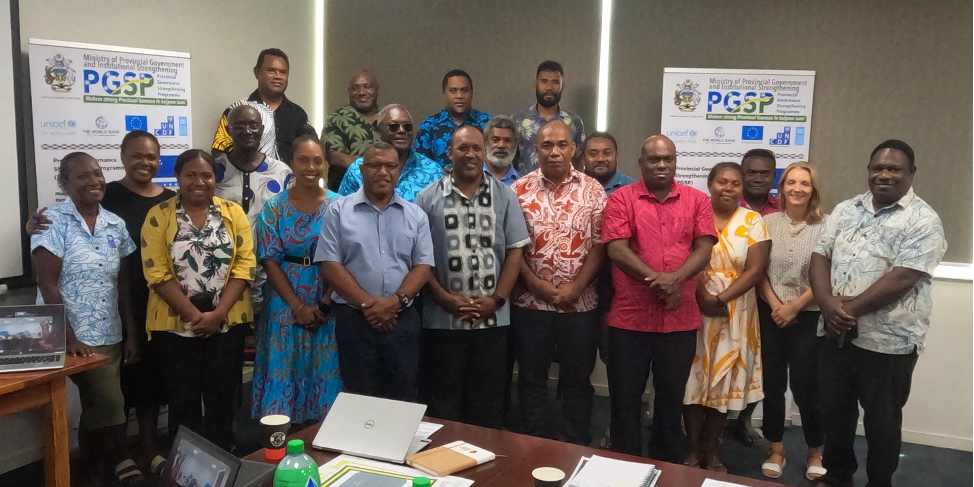
The Ministry of Provincial Government and Institutional Strengthening (MPGIS) successfully hosted a week‑long peer learning exchange with a high‑level delegation from Vanuatu’s Department of Local Authority, deepening regional cooperation on decentralization, risk‑informed development, and performance‑based provincial financing through the Provincial Capacity Development Fund (PCDF) of the Provincial Governance Strengthening Program of MPGIS.
The exchange reaffirmed the two countries’ shared commitment to strengthening institutional capacity, improving service delivery, and advancing community‑led development. It also highlighted the enduring friendship and mutual respect between Solomon Islands and Vanuatu.
Advancing Shared Learning on Decentralized Governance and Performance-based Grant System
The program focused on four core objectives:
- Strengthening cooperation on risk‑informed development
- Exchanging success factors and risk mitigation strategies
- Promoting mutual learning on decentralized financing mechanisms using PCDF Mechanism
- Documenting best practices to inform policy dialogue in Vanuatu.
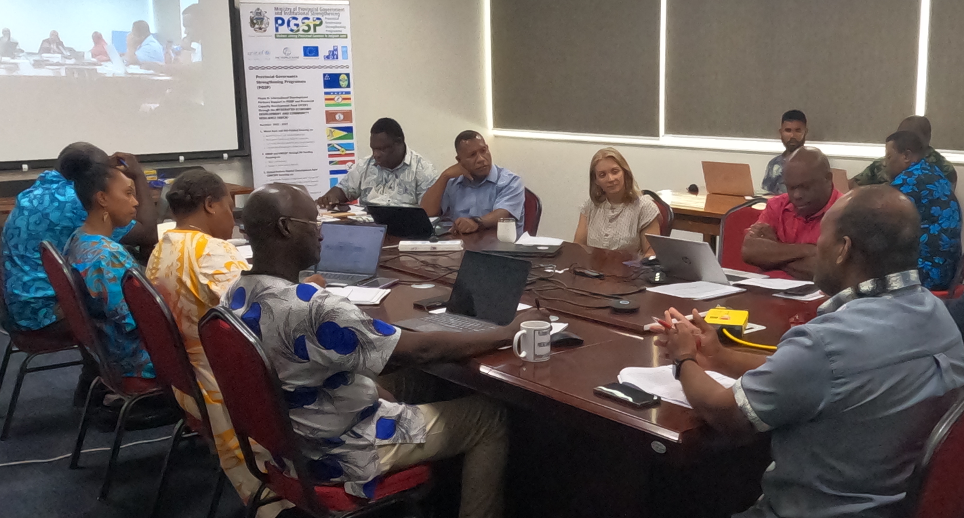
In his closing remarks, the Director General highlighted the importance of addressing decentralization and ensuring service delivery to people in Solomon Islands and in Vanuatu. He further expressed appreciation for the commitment, time, and energy of the participants, noting the rich insights shared during the exchange. He reiterated the objectives of the exchange, including mutual learning on decentralized financing mechanisms, the Provincial Capacity Development Fund of PGSP and sharing success factors.
The Director General thanked UNDP Governance for Resilience for funding the trip to Solomon Islands for this critical exchange. He thanked the Permanent Secretary for the ministry staff’s full participation in the sessions over the last three days. “We truly appreciate this opportunity and are happy to be here,” he said. Reflecting on the exchange, he added, “I can see that provinces have been able to deliver local infrastructure and services more reliably by tying funding to transparent financial processes and clear performance standards. The shared experiences have taught us many lessons.”
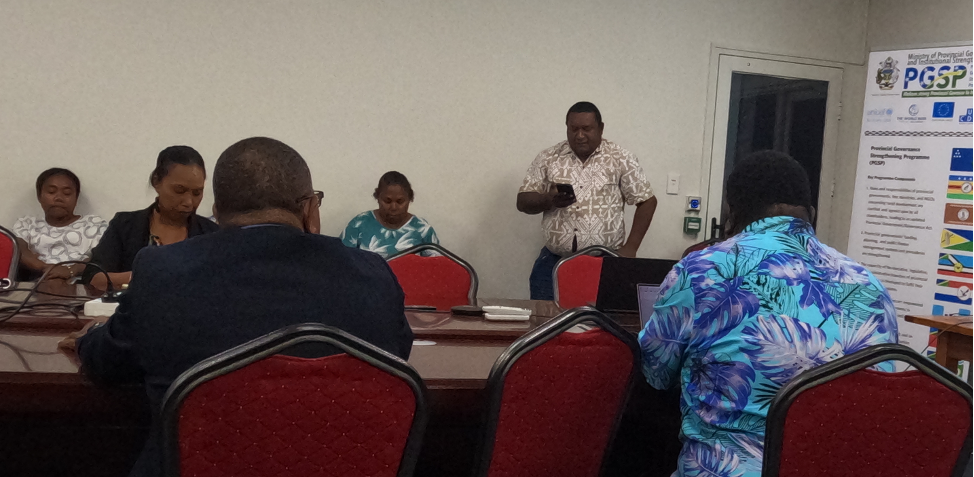
Showcasing Solomon Islands’ PCDF Achievements
In his welcome remarks, Mr. Michael Pasikeni, Deputy Secretary for Governance, highlighted Solomon Islands’ decade‑long experience in piloting and scaling the PCDF under the PGSP.
Since its inception in 2008, the PCDF has mobilized and invested approximately SBD350 million in government and donor funding and delivered 1,600 capital projects across the nine provinces. These investments have improved infrastructure and essential services in sectors including education, health, agriculture, sports, sanitation, water supply, roads, electricity, and bridges—creating more than 8,000 jobs in rural communities.
Governance outcomes have also strengthened significantly. Two provinces have achieved clean audit reports for more than three consecutive years, while 56% of provinces have moved out of the audit disclaimer zone, reflecting improved public financial management and oversight.

Strengthening Social Accountability and Community Resilience
MPGIS also showcased progress under the World Bank–funded Integrated Economic Development and Community Resilience (IEDCR) project, implemented in partnership with UNCDF, and UNICEF. To date, 173 Ward Development Committees (WDCs) have been established, with fund transfers initiated for WDC‑led micro‑projects.
These reforms, supported by the 2021/22 participatory planning and accountability Policy Blueprint of MPGIS, empower communities to identify and implement priority projects, support climate change adaptation and community resilience. Challenges such as capacity gaps and fund transfer delays are being addressed through enhanced monitoring and technical support from the development partners.
Insights on Leadership, Resilience, and National Vision
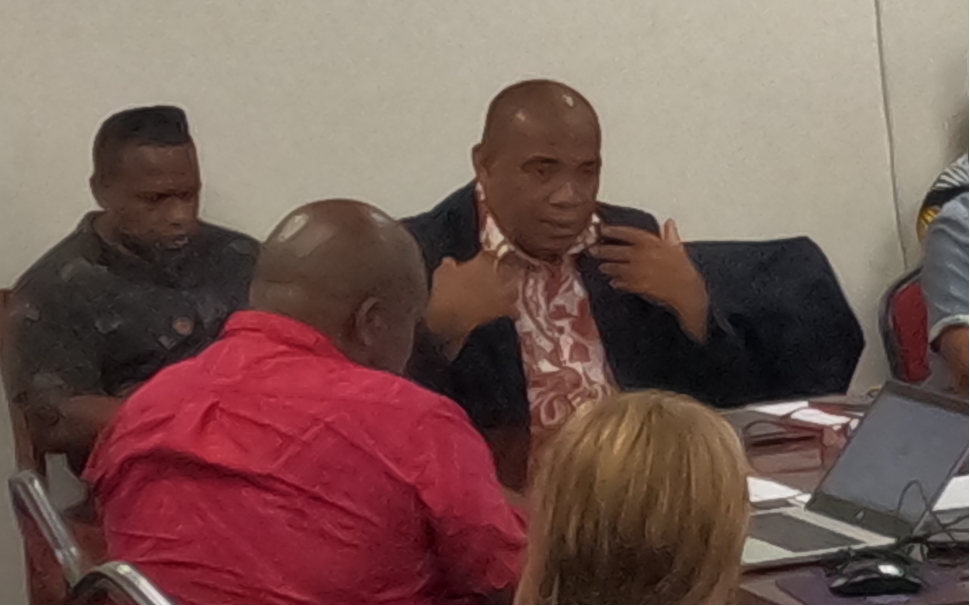
Former PCDF Joint Oversight Committee member and Secretary to the Prime Minister, Dr. Melchior Mataki, engaged delegates on the importance of national leadership in shaping a clear, locally responsive development vision. He emphasized innovative financing for resilience, including blended finance, performance‑based grants, and public–private partnerships suited to provincial capacities.
“Communities need to take charge of their own resilience, but they can’t do it alone,” Dr. Mataki noted. “When national frameworks align with local realities, and funding genuinely supports provincial delivery, systems become stronger and more sustainable.”
Aligning National Policy with Local Realities
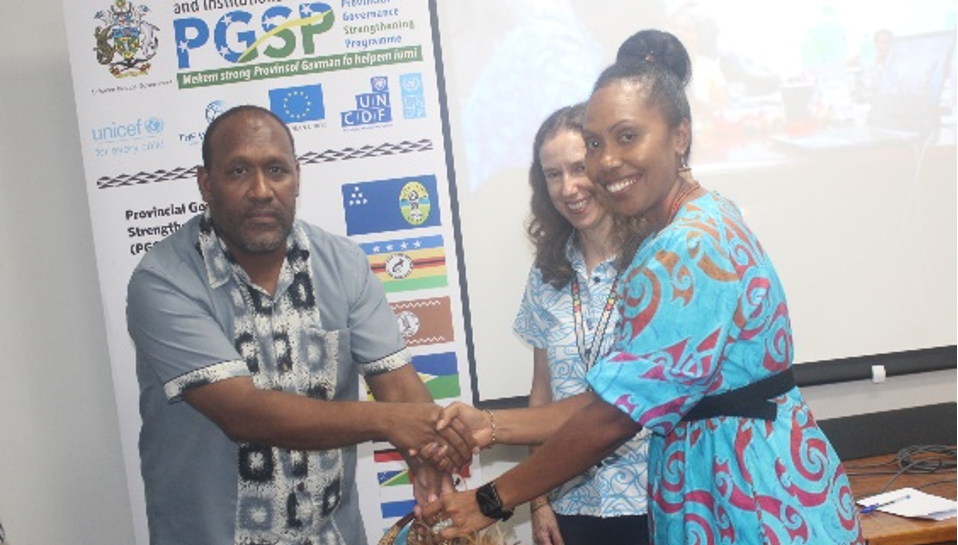
Permanent Secretary of MPGIS, Dr. Derek Futaiasi, led discussions on how strong national policy and clear legislation empower provincial leaders to deliver results. He underscored the importance of aligning national priorities with provincial implementation.
“We’re working on systems that set solid national standards while giving provinces the flexibility to find their own way,” Dr. Futaiasi said. “When policies are aligned, and we invest in tools—such as digital systems (services) reach people faster and public resources are used more effectively.”

Commitment to Continued Collaboration
Closing the exchange, Dr. Futaiasi thanked the Vanuatu delegation for their partnership and engagement. He noted that the exchange achieved its objectives, with both countries gaining a deeper understanding of the PCDF mechanism and its institutional arrangements.
“We’ve learned a lot from each other about decentralized financing,” he said. “I’m excited to continue working together and translate these lessons into policies that strengthen resilience, transparency, and service delivery in our communities.”
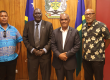
The Vanuatu delegation was led by Director General Mr. Leith Veremaito, and included officials from the Department of Local Authority, the Department of Strategic Planning, Policy and Aid Coordination, and a Sub‑regional Resilience Specialist from UNDP Vanuatu.
On the Solomon Islands side, the MPGIS Permanent Secretary was joined by his Deputy Secretaries of Governance, Deputy Secretary of Human Resources and Administration, Deputy Secretary of Special Duties, the Chief Technical Advisor of PGSP, senior officials from the PGSP, IEDCR project management unit, and representatives from the World Bank and UNDP Deputy Representative for Solomon Islands.
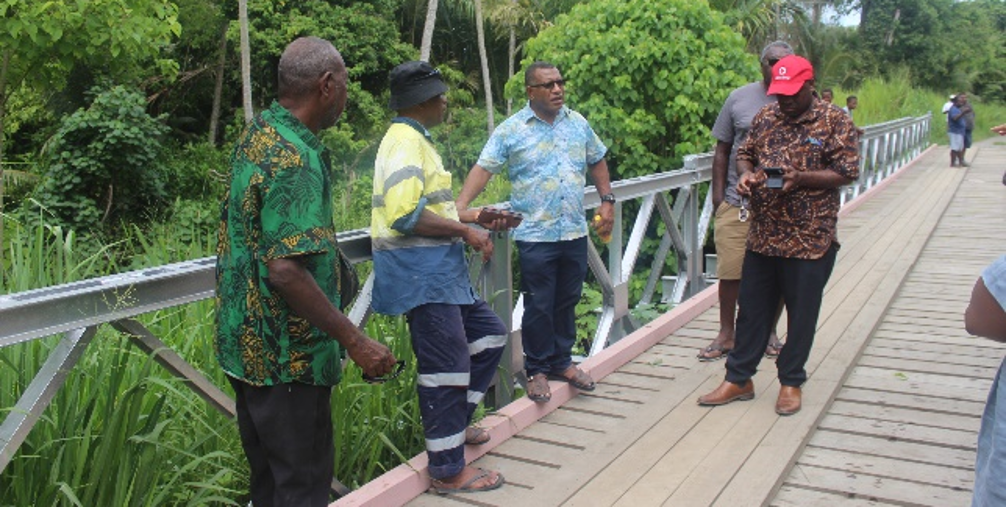
The delegation, accompanied by the Ministry and the project team, visited the Guadalcanal PCDF-funded Mataga bridge, the Agricultural Storage House and the new Chamber under construction at Mamara on Thursday, December 11th, before the team flew back to Vanuatu.
– MPGIS