Minister for Police, National Security and Correctional Services Jimson Tanangada has warned that the transnational organised crime landscape in the Pacific is evolving at an unprecedented pace.
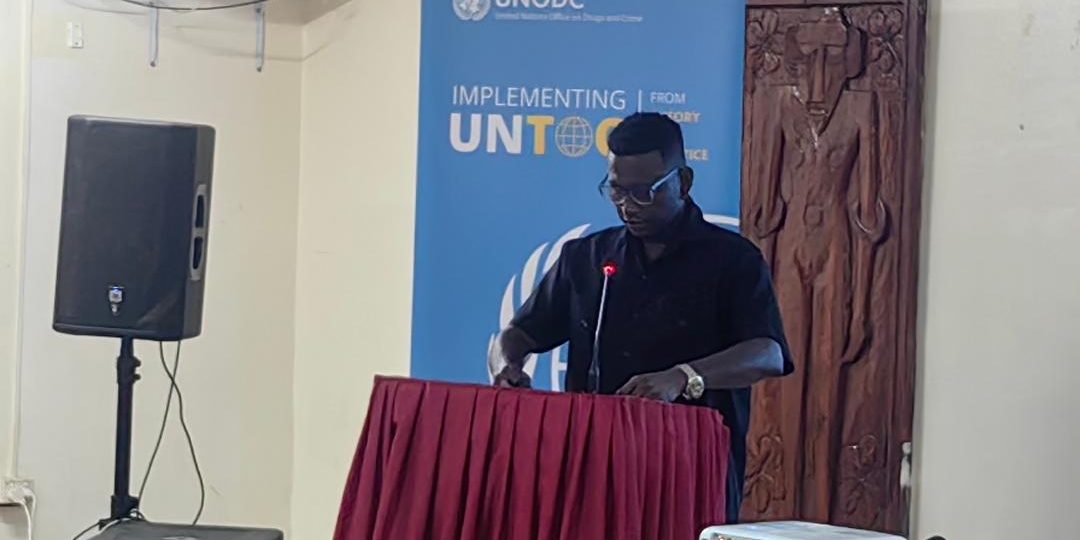
Speaking at the opening of the National Symposium on Strengthening Solomon Islands’ Response to Transnational Organized Crime in Honiara on Thursday, Tanangada said the country is increasingly vulnerable to sophisticated criminal networks.
“Our region’s geographic characteristics, extensive maritime borders, geographic isolation combined with proximity to some of the world’s largest illicit markets, and rapid advances in aviation and maritime mobility are being actively exploited by criminal networks. Solomon Islands is no exception,” he said.
He revealed that the country has recently experienced a rise in drug-related incidents and seizures, with the growing availability and transit of illicit drugs posing serious challenges.
“The increasing flow of illicit drugs is straining law enforcement, undermining the rule of law, and heightening public health risks,” he said.
Tanangada warned that the impact of transnational crime extends beyond policing.
“These threats have the potential to compromise customs integrity, burden the judiciary, overwhelm health services, and create dangerous entry points for corruption,” he said.
He also highlighted growing risks in the natural resources sector, particularly mining.
“The mining sector, especially gold, is emerging as a focal point of vulnerability, with illegal mining, document fraud, gold trafficking, money laundering, and illicit financial flows threatening both our economic development and the credibility of our regulatory institutions,” he said.
Tanangada stressed that these threats are immediate and escalating.
“These are not distant or abstract threats. They are present, they are growing, and they demand our collective and coordinated response,” he said.
He pointed to the Government’s National Security Strategy 2025 (NSS-2025), launched last year under Prime Minister Jeremiah Manele, as a key framework to address these challenges.
The strategy, themed “United for Security: A Collective Vision for a Resilient and Prosperous Solomon Islands,” is described as the country’s most comprehensive and consultative security framework.
“It recognises that national security is deeply linked to the well-being of our people, the resilience of our institutions, and the preservation of our natural environment,” Tanangada said.
The NSS-2025 aligns with Goal Five of the National Development Strategy 2016–2035 and reinforces the Government’s key policy pillars: economic transformation, unity and stability, infrastructure development, and human capital development.
He emphasised that combating transnational organised crime is central to the strategy.
The NSS-2025 identifies major threats including drug trafficking, money laundering, people smuggling, small arms smuggling, wildlife trafficking, and corruption, warning these could erode public trust, weaken institutions, and undermine national stability.
To address these risks, the strategy calls for:
- stronger border management across the country’s 1.6 million square kilometre maritime domain;
- improved inter-agency coordination and intelligence sharing;
- legislative and regulatory reforms to close gaps exploited by criminal networks;
- greater engagement with regional and international frameworks, including the Pacific Islands Forum, the Boe Declaration, and the UN Convention against Transnational Organized Crime (UNCTOC); and
- a whole-of-society approach involving government, private sector, civil society, and communities.