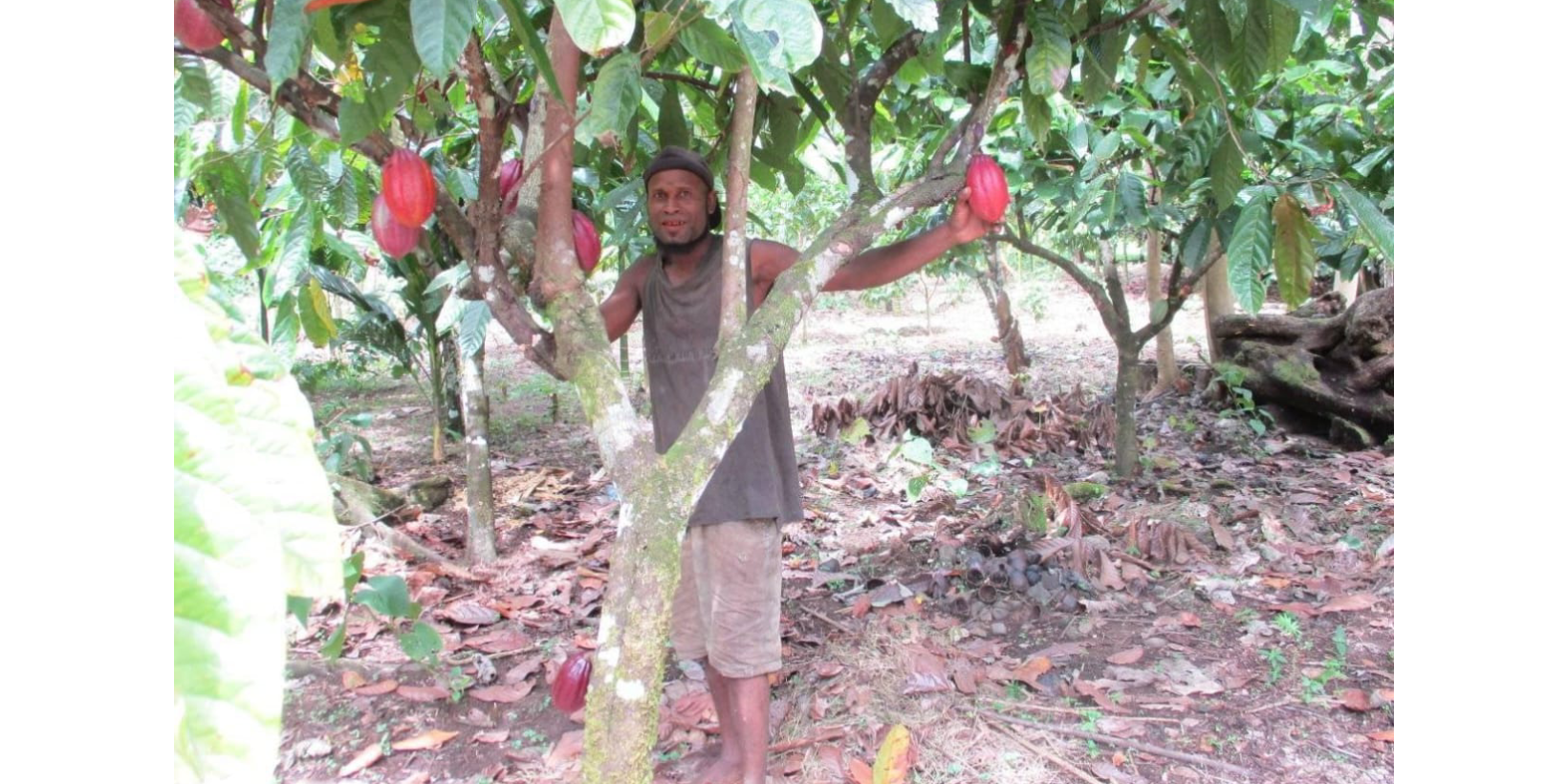
In the rural heart of West Kwaio, where cocoa trees have stood for generations, a young farmer is quietly shaping a future built on determination and hope.
At just 30 years old, Ronald Agwa is proving that agriculture—especially cocoa farming—remains a powerful pathway for rural development and youth empowerment.
For Agwa, cocoa is not simply a crop. It is a lifelong commitment rooted in family tradition and personal resilience.
“I will not forget cocoa farming despite some newly introduced crops reaching our area,” Agwa said firmly during an interview at his plantation.
“I am looking after this old plantation even though I also grow different crops such as kava and noni.”
In recent years, farmers across Malaita have diversified into alternative cash crops.
Kava and noni are becoming increasingly popular due to shifting market demands.
However, Agwa has chosen not to abandon cocoa, even as fluctuating prices challenge growers throughout the province.
Growing up among cocoa trees, Agwa learned early that farming is more than manual labor—it is a foundation for life.
He believes today’s youth must reconnect with the land to secure their futures.
“Growing up on the farm is very important for young people today.
“I want to improve my cocoa plantation and expand it to become bigger in the future,” he explained.
Agwa began his cocoa journey in 2006. His first achievement, though modest, remains meaningful to him.
He received a single cutting knife from the late Honorable John Garo, former Member of Parliament for West Kwaio.
That tool symbolized encouragement and recognition for his efforts as a young farmer.
Since then, his plantation has gradually supported him in practical ways.
Income from cocoa sales has helped him establish a small canteen and build a house—tangible proof that persistence yields results.
Despite these gains, 2026 has presented fresh challenges. Cocoa farmers selling wet and dry beans to markets in Auki are experiencing lower prices than in previous years.
The drop in payment has discouraged many producers, and some are considering leaving cocoa altogether.
“This year we are experiencing low cocoa payments,” Agwa said. “Some farmers are losing interest, but for me, I have nothing to lose but will continue.”
While others weigh their options, Agwa remains focused on quality production. He stressed that careful harvesting and proper fermentation are critical to maintaining high standards.
According to him, producing good-quality cocoa beans is essential if farmers want better returns in the long run.
“Good quality cocoa production is very important. Farmers must consider this when harvesting,” he emphasized.
Cocoa remains one of the Solomon Islands’ traditional export commodities and has historically contributed to rural livelihoods.
In villages across West Kwaio, cocoa trees surround homes and line community pathways, representing both heritage and opportunity.
Recently, more young farmers have begun planting cocoa again, inspired by rising global demand and the hope of stable income.
Agwa sees this renewed interest as a positive sign.
“Cocoa is more than just a farm. It is slowly increasing around our community. Many young farmers are now interested in planting,” he said.
However, he believes that sustained growth will depend on stronger institutional support.
Agwa is calling on responsible authorities to step in with financial assistance, farming tools, and technical guidance for rural growers.
“I would like to call on the responsible authorities to come down and support rural farmers with finance and tools,” he urged.
Access to proper equipment, improved seedlings, and training in post-harvest handling could significantly boost productivity in isolated communities like West Kwaio.
For many smallholder farmers, such support remains limited.
Still single at 30, Agwa dedicates much of his time to maintaining and expanding his plantation. His daily routine includes clearing undergrowth, pruning trees, harvesting ripe pods, fermenting beans, and preparing them for sale. While profits may fluctuate, his commitment does not.
“Despite the low payments this time, I am still interested in continuing my cocoa farm,” he said. “I want to maintain this farm even if others forget it.”
His words reflect quiet resilience—an attitude that defines many rural farmers who work without certainty but with unwavering belief in the land they cultivate.
As global markets shift and agricultural trends evolve, Ronald Agwa stands as a reminder that progress does not always come from abandoning tradition. Sometimes, it grows from nurturing it.
Under the shade of aging cocoa trees in West Kwaio, a young farmer’s vision continues to take root—one harvest at a time.
By Lesley Foinagwa
West Kwaio Stringer