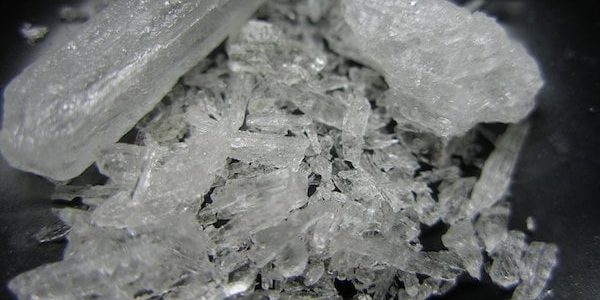
Chairman of the National Youth Congress, Harry James Olikwailafa, has raised serious concerns that methamphetamine, commonly known as meth, could cause chaos if it reaches street level in Solomon Islands.
Mr Olikwailafa made the statement when he appeared before the Bills and Legislative Committee (BLC) in Parliament yesterday.
The BLC is currently scrutinising the Dangerous Drugs Amendment Bill, which seeks to amend Section 39 of the Act by increasing the maximum penalty for large-scale drug trafficking and organised crime from 100,000 penalty units to 15 million penalty units.
Mr Olikwailafa said reports indicate that meth is being sold at retail prices between $300 and $500 per unit.
“Just a little, some conversation between young people as an observation and experience within our network,” he said.
He noted that currently, access to the drug appears limited to high-level and well-educated individuals who can afford the high cost.
“The worry of Congress is if the formula goes into local hands and is produced at an affordable price, our street kids will have access to it. But for now, it is among people who can afford the costs,” he said.
Mr Olikwailafa said some users take the drug to boost productivity, increase energy for work, or for pleasure. However, he warned that if it becomes accessible to street children, the consequences could be severe.
“If it goes to street kids, children and women will be vulnerable because their skin becomes itchy and they feel like taking the drugs again. They can cause harm to access the drugs,” he said.
He also claimed that three out of ten youths who use the drug reportedly obtained it from Asians.
Meanwhile, Buddy Wickham (No’amasahu), President of the Solomon Islands Indigenous Peoples Human Rights Advocacy, welcomed the proposed amendment to the Dangerous Drugs Act.
However, he said the organisation’s concerns extend beyond methamphetamine alone.
“Our communities are already struggling under the heavy burden of substances such as marijuana,” he said.
“Families, especially women, mothers and parents, have been dealing with violence. Financial hardship and community disorder lead to these drugs. The arrival and rapid spread of methamphetamine will only worsen these harms.”
Mr No’amasahu stressed that responding to dangerous drugs cannot rely solely on law enforcement.
“Prevention, community awareness and local leadership must be at the heart of our national response. Churches, village leaders, women’s groups, youth groups and traditional authorities all play essential roles in educating families, identifying early warning signs and supporting rehabilitation and healing,” he said.
He added that the organisation stands ready to provide further technical input if required.
The BLC inquiry continues on Friday.