Solomon Islands has reaffirmed its strong commitment to transforming its agriculture sector and enhancing regional food security through active participation in the Asia-Pacific Food Forum and the 38th Session of the FAO Regional Conference for Asia and the Pacific, held from 20–24 April 2026 in Brunei Darussalam.
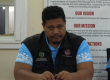
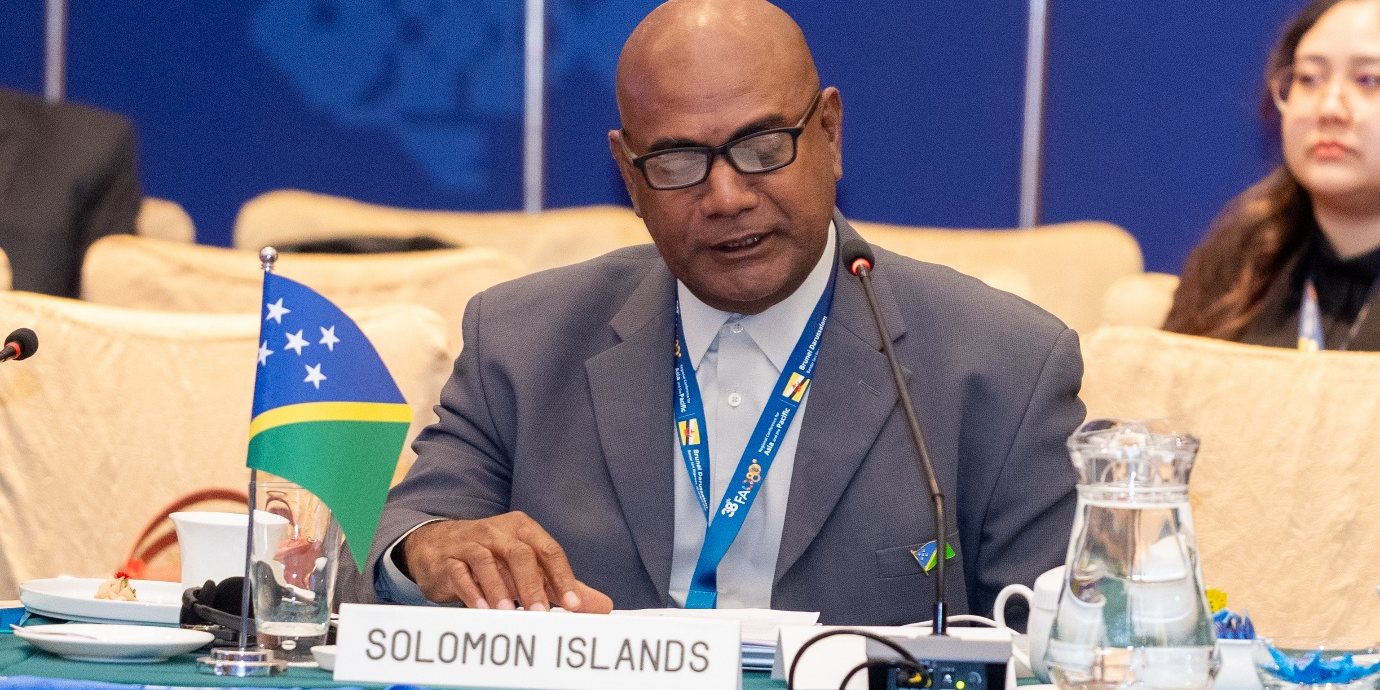
Representing the Solomon Islands Government, Deputy Secretary Special Duties of the Ministry of Agriculture and Livestock Development (MALD), Mr. Simon Baete, pictured, joined ministers, senior officials, development partners, private sector leaders, researchers, women entrepreneurs, and youth delegates from across the Asia-Pacific region.
Speaking during the Forum, Mr. Baete conveyed the Government’s appreciation to the host nation, Brunei Darussalam, for its warm hospitality and to the Food and Agriculture Organization of the United Nations (FAO) for convening the regional gathering at a critical time. He noted that countries across the region are facing increasing pressures on food security, livelihoods, and sustainable development.
Mr. Baete highlighted that discussions at the Forum focused on the urgent need to accelerate agri-food systems transformation through strategic investment, science, innovation, and inclusive leadership.
Key challenges identified included climate change, rising food prices, food safety concerns, labour shortages, rural-urban migration, and unequal access to finance and technology.
The Forum also underscored the vital role of women in agriculture, in line with the International Year of the Woman Farmer 2026. Participants recognized women as central contributors to food systems as farmers, entrepreneurs, processors, traders, and community leaders whose empowerment is essential to sustainable development.
The Solomon Islands delegation acknowledged the strong partnership with FAO and expressed appreciation for ongoing support through key initiatives. These include the Sustainable Transformation of Domestic Agrifood Systems (STODAS) Project, the Agricultural Investment for Markets and Nutrition (AIM-N) Project, the forthcoming Food Systems Investment Programme (FSIP), and the Least Developed Countries Fund (LDCF) Project, which is nearing final proposal submission.
Collaboration also continues in areas such as digital agriculture, the One Country One Priority Product Initiative, and the Hand-in-Hand Initiative.
During the Conference, Solomon Islands outlined six national priorities for partnership and support to strengthen the country’s agriculture and livestock sectors.
These priorities include:
- Revitalising the coconut and cocoa industries through replanting, rehabilitation of ageing plantations, farm expansion, farmer support programmes, improved logistics, and stronger pest and disease management.
- Advancing commercial agriculture and livestock development in commodities such as kava, rice, taro, oil palm, piggery, cattle, and honey production, while creating opportunities for youth, women, and agribusiness enterprises.
- Strengthening the poultry industry to reduce food costs and import dependence through feed production, maize and corn development, breeding facilities, processing infrastructure, and farmer support initiatives.
- Enhancing agricultural value chains and post-harvest systems through investment in processing, packaging, transport, aggregation centres, and cool storage facilities.
- Accelerating digital transformation through the establishment of a digital farmer registry and modern agricultural information systems to improve planning, extension services, market access, disaster response, and evidence-based decision-making.
- Promoting agricultural mechanisation to raise productivity, address labour shortages, and attract greater youth participation in farming.
Speaking at the Conference, Mr. Baete acknowledged that while these priorities are ambitious and necessary, Solomon Islands continues to face practical constraints common to many Small Island Developing States.
These challenges include high transport costs, limited rural infrastructure, vulnerability to climate change and natural disasters, pest and disease risks, constrained access to finance, weak digital connectivity, and market access barriers for remote communities.
He emphasised that addressing these challenges will require stronger national, regional, and international partnerships, particularly in agricultural research, climate-smart agriculture, biosecurity, livestock genetics, feed development, mechanisation, digital agriculture, cold storage, trade facilitation, and capacity building for farmers, youth, and women.
The Solomon Islands Government through MALD reaffirmed its commitment to building a productive, resilient, and inclusive agri-food system that improves livelihoods, supports economic growth, and contributes to regional food security.
The Government also expressed its appreciation to development partners and regional organizations and looks forward to deepening cooperation in the years ahead.
MALD Press