Participants in the recently completed Exercise Coastwatchers have spoken about the new skills they acquired that will help keep Solomon Islands secure.
Exercise Coastwatchers, a joint activity betwen the Royal Solomon Islands Police Force (RSIPF) and the Australian Defence Force (ADF) concluded earlier this month. It takes its name from the Coastwatchers of World War II, a secret communication network comprised of Australians and Solomon Islanders which reported information to the Allies on military assets moving across the Pacific.
True to this legacy, this instance of Exercise Coastwatchers included advanced courses focused on maritime and border surveillance, bringing together students from earlier small boats operator and drone operator courses to further upgrade their skills.
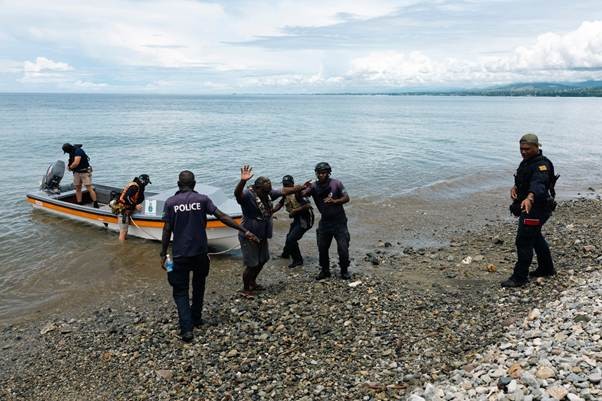
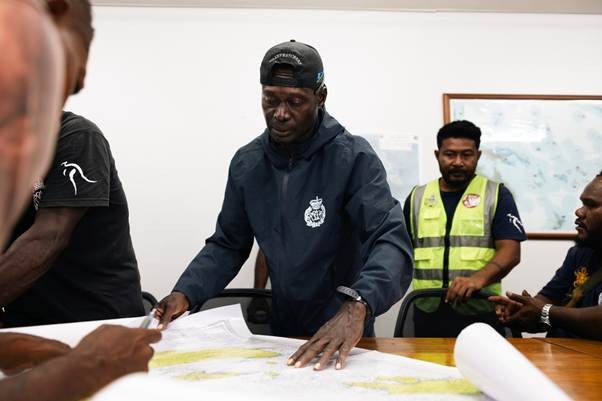
The course required students to work together and draw on a wide range of skills in a simulation targeting criminal activity. After receiving information on potential criminals, they planned their mission, and worked with the small boats teams to move quietly to areas where they could collect information and guide teams to intercept the criminals.
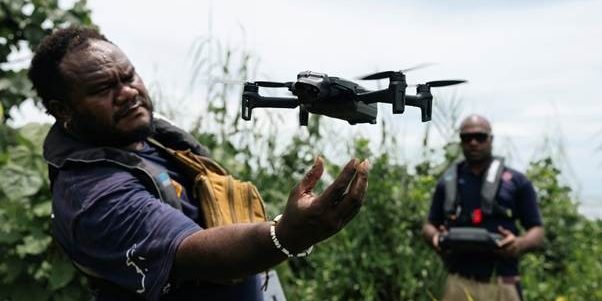
RSIPF Drone Support Unit Chief Pilot Sergeant Molly Buiaraha said the drone training related directly to what is expected of RSIPF operators in their roles.
“The drone capability is new for us so having the drone training is good, it’s an eye-opener and expands our knowledge,” SGT Buiaraha said.
“Everything they learn will be put into practice, but I think the mapping and navigation was most important and now we have the skills to really pinpoint locations.”
SGT Buiaraha said there has been a keen interest from RISPF officers to conduct Coastwatchers drone courses, and that the integration between drone and maritime surveillance courses is a big win focused on practical application.
“It’s really good to have the drone and maritime surveillance units work and integrate together, it’s really helpful especially in search and rescue,” she said.
“From what I’ve seen there’s a big interest from officers to participate in the course, to know more and upgrade their skills around the drone capability.”
“For the future I think it’s really good to have the advanced level training and I do hope to see more courses and more integration in the future.”
The advanced drone and border surveillance course students learned about patrolling, how to work in small teams, long range reconnaissance, intelligence collection and how to operate drones in support of border surveillance and natural disaster response.
Advanced course instructor Corporal Aaron Caruana from the ADF has now participated in three defence activities in the Solomon Islands. He said it was great to deepen the longstanding relationship between the two nations, and that he’s lucky to see the evolution of the RSIPF drone capability.
“Exercise Coastwatchers has been a great experience overall, the collaboration and support between the Defence Cooperation Program and the RSIPF has allowed us to deliver this advanced training.”
“There’s plenty of positives about being over here instructing, but the relationship we’re building with the RSIPF is a highlight, developing new relationships and reconnecting with ones made on previous trips,” CPL Caruana said.
While drone technology brings surveillance into the modern era, the principles remain true to the rich, proud and enduring history of the Coastwatchers from World War II.